Is Your Home Wiring Outdated? Signs It Needs Replacing
Lots of homes in Melbourne still run on wiring put in when a house had a radio, a fridge and a handful of light globes. Since then insulation has degraded, connections have worked loose and the load has grown many times over. Unlike a leaking roof, failing wiring gives you hardly any warning before it turns dangerous. Fortunately there are dependable warning signs, and a licensed electrician can objectively measure how your circuits are holding up instead of guessing. Below is what to watch for and what to do next.
Warning signs you can spot by sight and smell
Power points and light switches that are scorched, browned or discoloured show that a connection is getting hot, so a termination has come loose or degraded. A warm power point is the same problem at an earlier stage.
A smell of burning plastic, or an acrid or fishy odour near a light fitting, outlet or switchboard means insulation is overheating, and needs urgent attention. Switch off that circuit at the switchboard and get an electrician in before you use it again.
When a switch, an outlet or the switchboard crackles or buzzes, that's arcing. Sparks when plugging something in, apart from the odd harmless flash, mean the contacts are worn. A tingle from a tap, appliance or metal fitting is an earthing fault and needs attention immediately.
Signs in the way your wiring behaves
If lights flicker or dim as the washing machine, air conditioner or kettle starts up, that suggests voltage drop from degraded or undersized cable, or a connection that's come loose somewhere along the circuit.
Safety switches or breakers that trip often are trying to tell you something. The odd trip from a failing appliance is normal; repeated trips on one circuit aren't. Our Safety Switch Keeps Tripping? Here's Why explains how to narrow it down.
Power points that work only some of the time, or cut out when you jiggle the plug, tell you the terminations or the accessory itself have failed. Leaning on power boards and double adaptors all through the house shows the circuit layout no longer suits the way you live, which is about capacity rather than safety, though it's usually fixed at the same time.
Age markers that show when it was wired
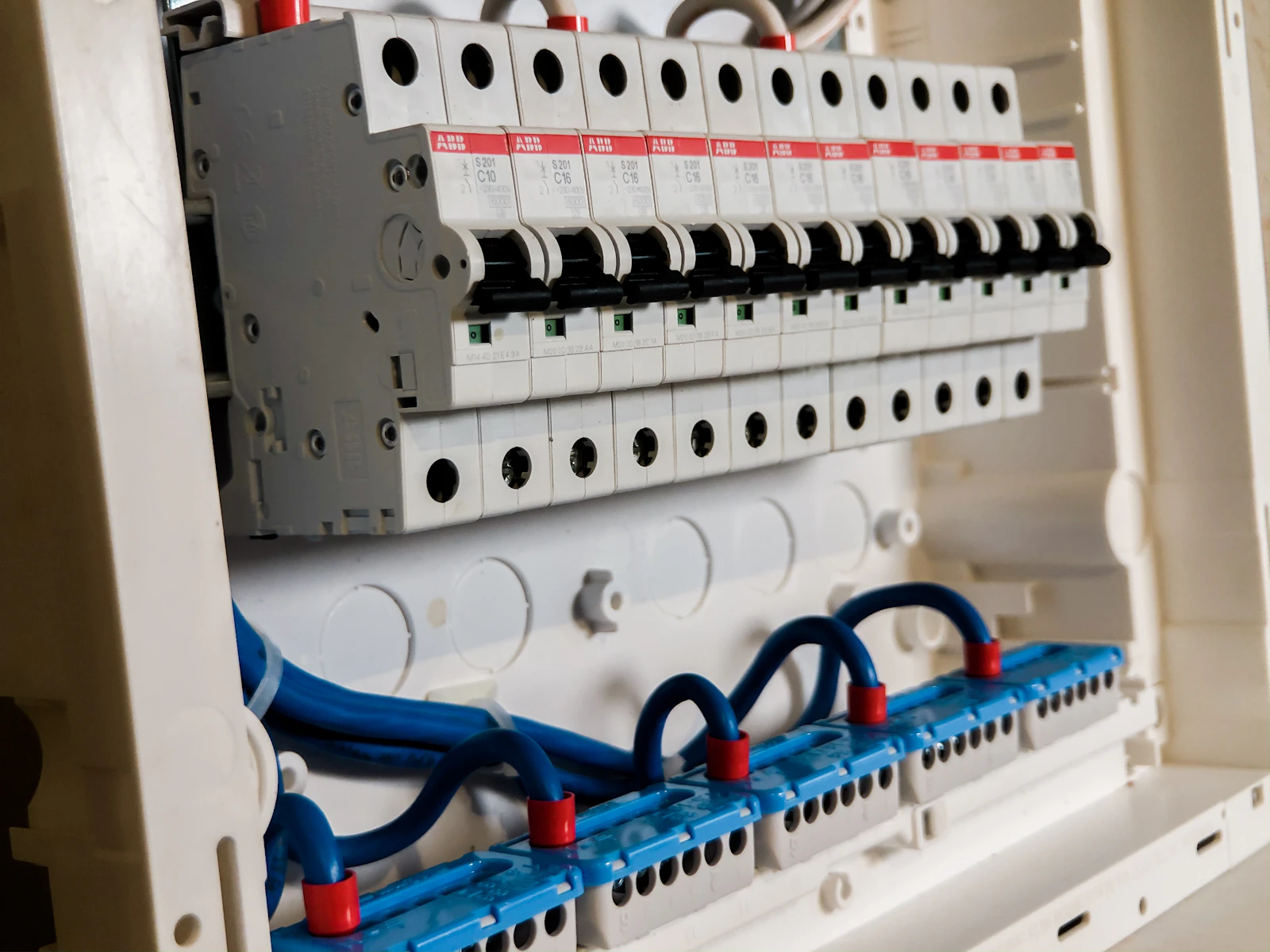
In most homes, fuse wire in ceramic rewireable fuses puts a board before the 1980s. Having no safety switches on lighting and power circuits generally dates the installation to before the mid 1990s.
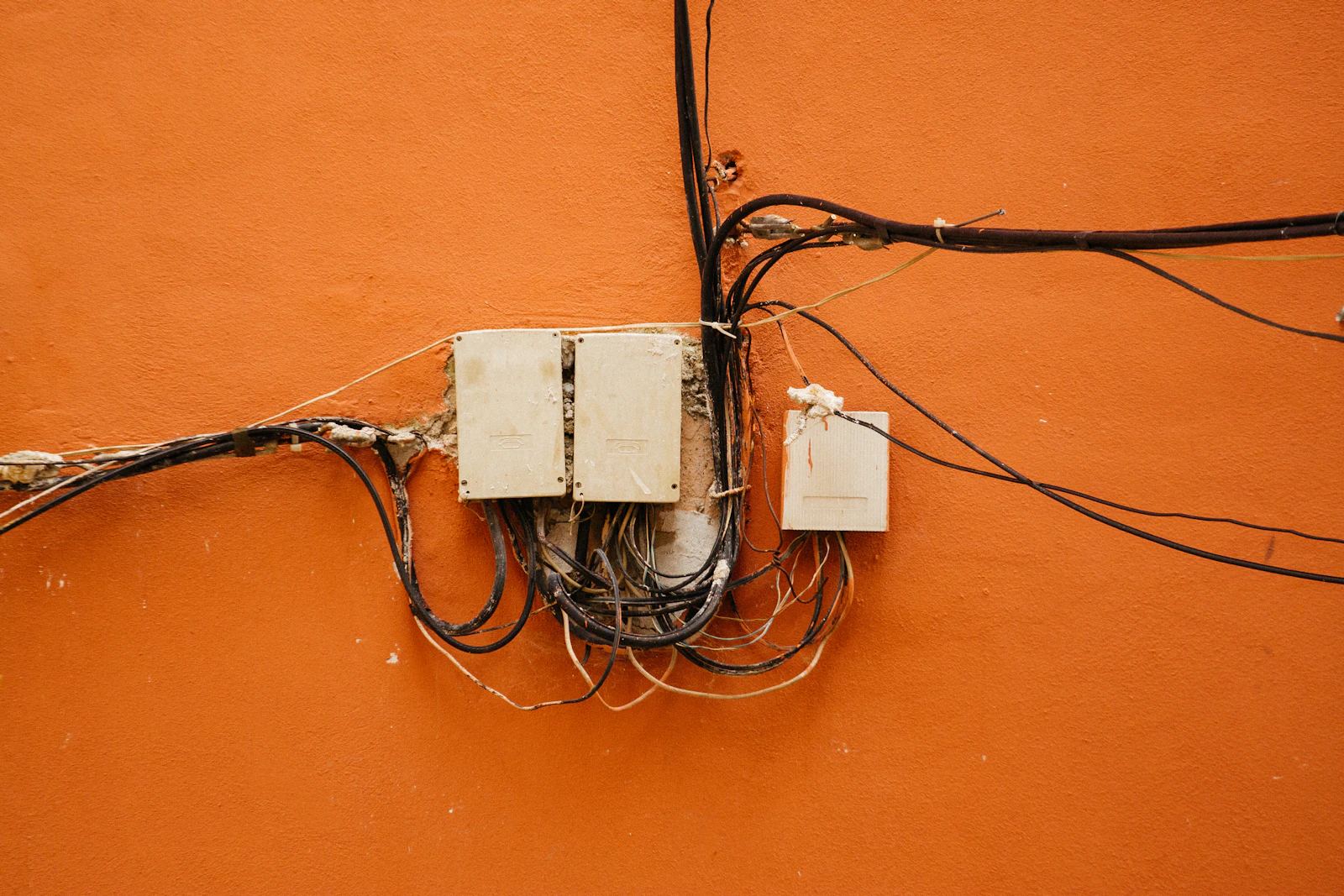
Rubber or cotton braided cable up in the roof is the plainest sign a home needs rewiring. Rubber insulation that's gone brittle cracks when it's disturbed, so even walking across the ceiling cavity to put in a downlight can cause a fault.
Black round-pin outlets, two-pin power points with no earth, metal light fittings lacking an earth conductor and cloth-covered flex on fittings all point to original mid-century wiring. It's also worth having aluminium cable checked in some 1960s and 70s installations.
Why ageing wiring matters beyond the obvious
When insulation degrades it lets leakage current through, and that's what's behind repeated safety switch trips. With no safety switch fitted, that same leakage gives no warning whatsoever until the ceiling catches fire or a person receives a shock.
After a fire, insurers can and do ask questions about electrical compliance, and a record of Certificates of Electrical Safety helps a great deal. Building inspectors and buyers also flag unearthed circuits and old boards, which can affect both settlement and price.
There's a practical side as well. Old circuits can't cope with an EV charger, ducted air conditioning, induction cooking or a home office. Each of those upgrades hits the same question: can the existing wiring be safely extended?
How an electrician checks the condition of wiring
First we visually inspect the switchboard, the roof space and any accessories we can reach, recording the cable type, the earthing arrangement and any earlier unpermitted work. After that we take measurements, since how it looks isn't enough on its own.
Testing insulation resistance on every circuit gives a figure showing how far the insulation has deteriorated. Earth continuity and loop impedance tests confirm the protective system really works. RCD testing checks trip times. Between them they give an objective, circuit-by-circuit picture.
You end up with a written report showing which circuits are sound, which need remediation and which have to be replaced. That way you can stage the work over time instead of doing it all at once, if rewiring the whole house isn't practical at the moment.
Full rewire, partial rewire or switchboard upgrade
A full rewire replaces the switchboard and every circuit, and it's the right call where a home still has its original rubber-insulated cable all through. Because it's disruptive, it's usually planned to coincide with a renovation or a gap between tenancies.
A partial rewire swaps out the worst circuits, usually any unearthed lighting plus the kitchen and laundry, and keeps the sound ones. Paired with a modern board, it gives most of the safety benefit with far less disruption.
Often the starting point is simply a switchboard upgrade that brings RCD protection to every circuit, followed by fixing whichever circuits fail their tests. We regularly do this in older housing around Brunswick and Northcote. To arrange an assessment with a written fixed price, call Electric Electrician on 0468 515 481. Our house rewiring service explains our approach to testing, pricing and staging the work.