
Switchboard
Upgrades
Brunswick
Fixed Price.
Knob-and-tube wiring, porcelain fuses and shops with a flat upstairs: our Brunswick switchboard upgrades properly allow for the suburb's older homes.
Brunswick Fixed Price.
Knob-and-tube wiring, porcelain fuses and shops with a flat upstairs: our Brunswick switchboard upgrades properly allow for the suburb's older homes.
Trusted brands
 Clipsal
 Legrand
 Mitsubishi
 Daikin
 Fujitsu
 Panasonic
Switchboard Upgrades in Brunswick
Some of the oldest homes we work on regularly are Brunswick's 1920s workers cottages. Fabric-insulated or knob-and-tube wiring is still often found feeding a board with porcelain fuse carriers, not anything like a modern circuit breaker.
Many Sydney Road shopfronts have a home behind or above them, with a retail business and a residence drawing on one ageing supply and switchboard. That arrangement dates from before anyone thought about dedicated safety switches or separate metering for each use.
Across Coburg, Jewell, Anstey and Brunswick East, studio and warehouse conversions have driven plenty of renovation, loading boards never designed for ducted systems, kilns or proper home offices. That's on top of older housing in the suburb that's often overdue for attention anyway.
In short
Which electrician handles switchboard upgrades in Brunswick?
Electric Electrician carries out switchboard upgrades in Brunswick's warehouse conversions, workers cottages and Sydney Road shopfronts. We hold an A-Grade licence, bring old porcelain-fuse and knob-and-tube boards up to current standards, and provide a Certificate of Electrical Safety with every job.
What you'll often find behind a Brunswick cottage board
Unrenovated 1920s cottages often still have the original board with porcelain rewireable fuses, sometimes with stretches of knob-and-tube or fabric-insulated wiring deeper in the roof space. A dedicated safety switch is usually absent, and the main switch may be the original one.
Mixed-use buildings on Sydney Road can be even older or more makeshift, with wiring for the residence upstairs and the shop below extended over decades and never fully checked against what the shared supply can really carry.
Upgrading older Brunswick homes: what's involved
If there's fabric-insulated or knob-and-tube wiring, a board upgrade often opens a wider discussion about rewiring parts of the house, because deteriorated old cabling doesn't always sit well with modern RCBOs. If we come across this during the job, we'll tell you straight.
In Sydney Road buildings with a shop and a residence, we consider whether separate metering, or at minimum separate final sub-circuits for each, is sensible, so a safety switch tripping downstairs doesn't kill the lights in the home above.
- Check of any fabric-insulated or knob-and-tube wiring feeding the board
- RCBOs fitted on every circuit in place of porcelain fuses
- Separate circuits considered for residence and shopfront loads
- Consumer mains checked for studio and warehouse conversions running heavier gear
- Fixed price, with wiring concerns raised clearly before work goes ahead
How it works
Stress-free from first call
to power on
Skip the endless emails, the quote chasing and the dodgy pricing. Get in touch today, receive a clear fixed price quickly, and a licensed electrician can often be at your place that same week.

Tell us what you need
Call, message or use the online form in two minutes. Say what needs doing, or what's wrong, and we'll reply promptly.
Get your fixed price
After an inspection, you get one clear all-inclusive price before work begins. The quoted figure is what you pay, with no unexpected extras.
Sit back, job done tidy
A licensed A-Grade electrician carries out your job to AS/NZS 3000, tests each circuit and leaves your home tidier than before.
When a Brunswick property needs a new switchboard
A burning smell around the board, porcelain fuses blowing, or a Sydney Road shop sharing a tripping circuit with the flat upstairs all warrant a proper look instead of more fuse wire. Another common trigger is a warehouse conversion running welding gear, kilns or heavy workshop tools from an old board.
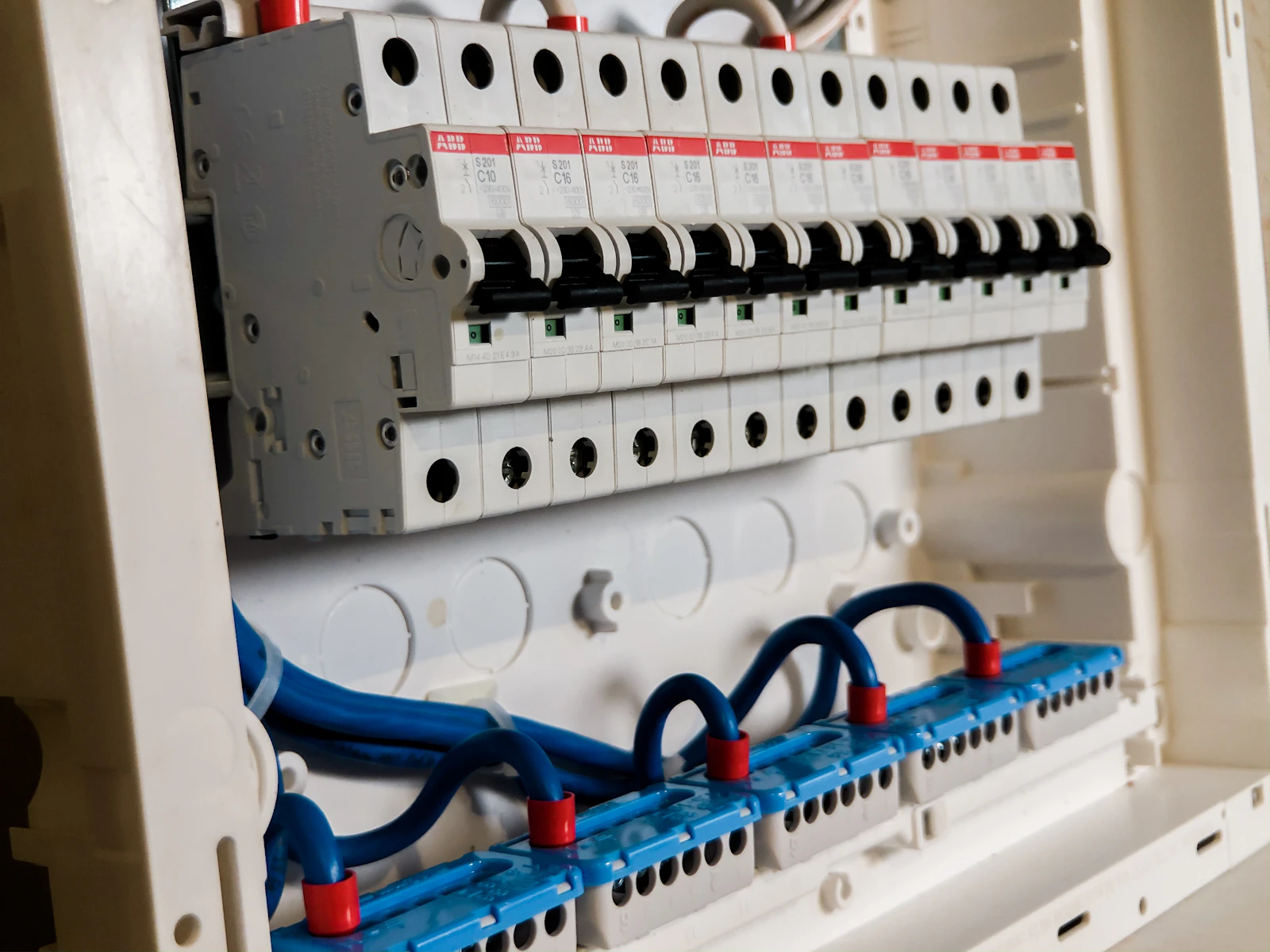
You get RCBOs, a new main switch, and mains rated for the building's real present-day load, plus a CES as proof.
What every Brunswick job includes
- A-Grade licensed electrician, fully insured
- A written, fixed price settled before any work begins
- Work completed to AS/NZS 3000
- Certificate of Electrical Safety on completion
- Lifetime workmanship guarantee
Switchboard Upgrades in Brunswick: common questions
Can knob-and-tube wiring legally stay in Brunswick homes?+
It may stay in use if it's in good condition, but it's old, frequently deteriorated and doesn't sit easily with modern RCBO protection unless it's carefully assessed. When we upgrade a switchboard we check exactly what feeds it, and we'll say plainly if some circuits should be considered for rewiring as well.
On Sydney Road, can the shop's switchboard be split from the residence above?+
Yes, we're often asked for this. Separating final sub-circuits, or setting up separate metering through the distributor, stops the shop's safety switch from cutting power to the home upstairs when it trips, and the reverse as well. We'll look at your current supply setup to work out what's practical for the building.
Should porcelain fuse boards be replaced before they fail?+
They're well worth upgrading anyway, because they have no RCBOs and depend on fuse wire that's easily overloaded or bridged the wrong way. Buyers and most insurers expect a modern board these days, and upgrading ahead of time is safer than waiting for a fuse to go at a bad moment.
Does a warehouse conversion need more than a standard board swap?+
It might. If kilns, welding gear or heavy workshop equipment are running, the consumer mains, and possibly the incoming supply, might need a review as well as the board. We go through your actual equipment list before we quote, so the new board is properly sized and not just a like-for-like swap.