
Switchboard
Upgrades
Heidelberg
Fixed Price.
An older front room, a renovated kitchen and an apartment unit can have very different protection arrangements. A new board should reflect the circuits in use now, rather than simply repeat the device layout it replaces.
Heidelberg Fixed Price.
An older front room, a renovated kitchen and an apartment unit can have very different protection arrangements. A new board should reflect the circuits in use now, rather than simply repeat the device layout it replaces.
Trusted brands
 Clipsal
 Legrand
 Mitsubishi
 Daikin
 Fujitsu
 Panasonic
Switchboard Upgrades in Heidelberg
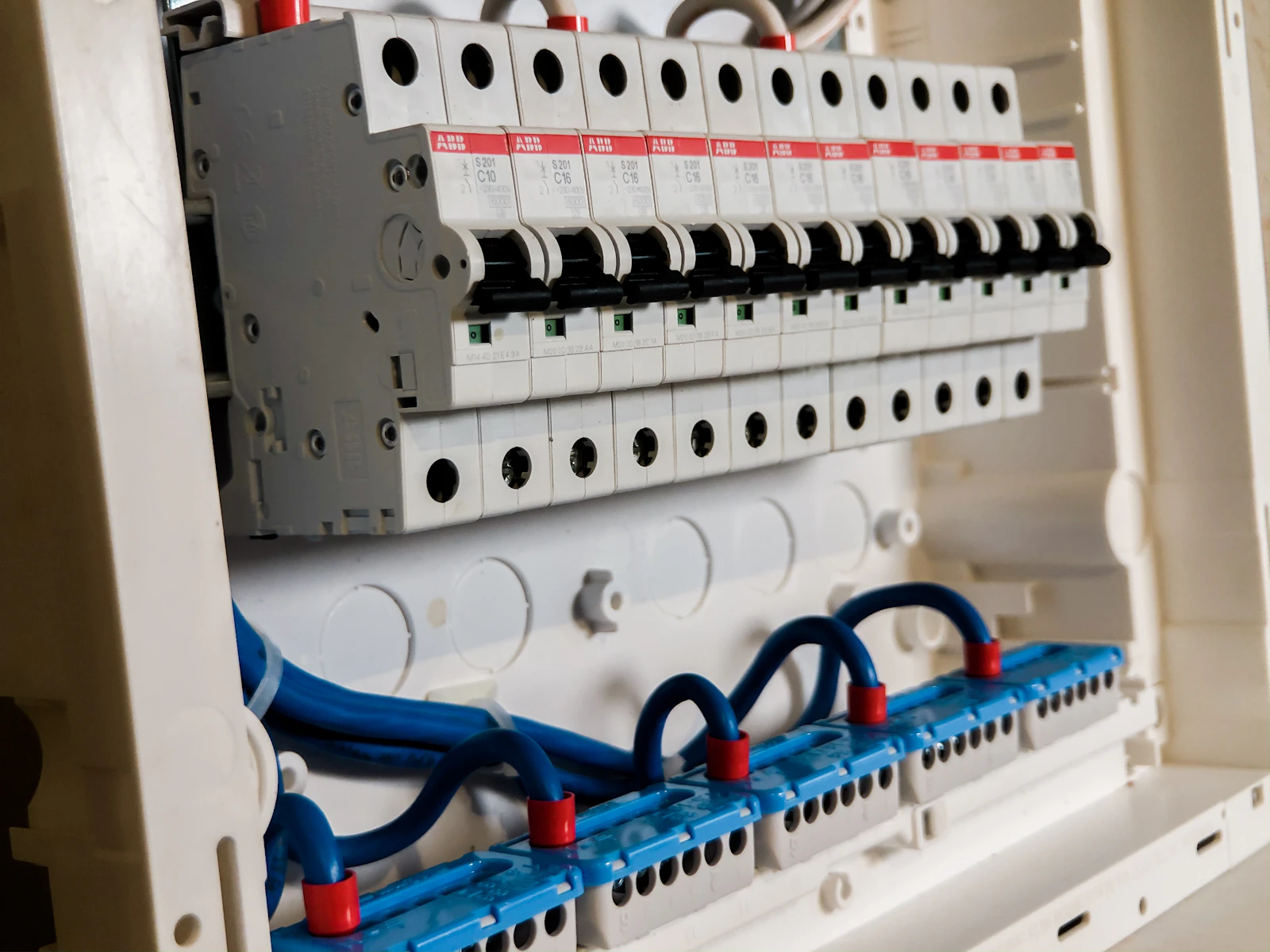
Older homes off Burgundy Street and Upper Heidelberg Road can retain original circuits in front rooms while the back of the house has been renovated. A switchboard may connect those two histories without clear labels. Understanding what remains old and what was changed is more useful than treating the enclosure as an isolated box of devices.
Post-war houses and unit blocks can have supply equipment chosen before multiple air conditioners, induction cooking and home-office loads were expected together. Current demand therefore needs reviewing rather than being inferred from the number of occupied board positions. Space for another switch does not tell you whether the incoming connection can serve another appliance circuit.
Modern apartments near the station and hospital precinct have a different context. The dwelling may be current, but any work touching common property follows owners corporation arrangements. That includes the way additional circuits connect to shared services. A replacement inside the unit and a change to building infrastructure should not be confused within one undefined scope.
In short
What needs checking before a new board in Heidelberg?
Before choosing new protection for a period house, post-war home or older unit, the existing circuits need a proper assessment. With modern apartments, the job also hinges on where your equipment ends and the common equipment begins. We hold an A-Grade licence and full insurance, fix the price before we start, and finish every job with a Certificate of Electrical Safety.
Establish protection and condition on every retained circuit
A fuse opening under load and a residual current device detecting leakage are different events. Both can appear as a sudden loss of electricity to a room, but the appropriate remedy depends on the cause. A board assessment considers the conductors, earthing and protective arrangement, rather than increasing ratings until the appliances stop causing interruptions.
Ordinary breakers alone do not offer all the functions of combined residual current and overcurrent devices. A modern circuit arrangement should provide appropriate protection and clear isolation. The wiring connected to each device must also be suitable for continued service. New hardware cannot make degraded insulation sound or remove a poor connection hidden further along a cable.
Set the work boundary for houses and apartments
In a house, the board may serve both retained front-room wiring and newer rear additions. The proposed replacement needs to state what happens to each. Where further cable work is needed, it is a separate part of the scope. A homeowner should understand whether the task is protective equipment replacement, circuit alteration or wiring renewal.
For a unit or apartment, establish which board and supply equipment belongs to the dwelling before access is assumed. Building rules can apply when work crosses common property. Information from the owners corporation helps define that boundary, but the electrical arrangement still needs checking. A shared service should not be treated as private simply because it ultimately supplies one apartment.
- Identify original front-room wiring and renovated rear circuits
- Compare cooking, cooling and home-office demand with the supply
- Distinguish private apartment equipment from common infrastructure
- Define any additional cable work alongside board replacement
- Keep protective devices matched to the conductors they serve
How it works
Stress-free from first call
to power on
Skip the endless emails, the quote chasing and the dodgy pricing. Get in touch today, receive a clear fixed price quickly, and a licensed electrician can often be at your place that same week.

Tell us what you need
Call, message or use the online form in two minutes. Say what needs doing, or what's wrong, and we'll reply promptly.
Get your fixed price
After an inspection, you get one clear all-inclusive price before work begins. The quoted figure is what you pay, with no unexpected extras.
Sit back, job done tidy
A licensed A-Grade electrician carries out your job to AS/NZS 3000, tests each circuit and leaves your home tidier than before.
Plan additions around a sound starting point
Adding a cooling or cooking circuit can expose limitations in old distribution equipment, but it should not trigger an automatic assumption that the whole house needs rewiring. Circuit tests and supply assessment establish the necessary changes. A fault can be local to one connection, while excessive demand can involve several loads that the original arrangement did not anticipate.
Properties around Banksia Street, Rosanna Road and Cape Street vary in age and use. The right specification follows the actual installation, including any future appliance plans disclosed by the owner. The intention is a clear arrangement with suitable protection and understandable isolation, not the largest possible enclosure or a promise that it can accommodate any later electrical addition.
What every Heidelberg job includes
- A-Grade licensed electrician, fully insured
- A written, fixed price settled before any work begins
- Work completed to AS/NZS 3000
- Certificate of Electrical Safety on completion
- Lifetime workmanship guarantee
Switchboard Upgrades in Heidelberg: common questions
Can the old front rooms stay connected to a new board?+
They can only remain where the wiring is suitable for continued use and the proposed protection. Their condition needs assessment even if the rear renovation has modern cable. Replacing the board does not automatically replace the retained circuits throughout the house.
Is tripping with air conditioning always an enclosure problem?+
No. It can involve excessive demand, an appliance fault or a wiring defect. A bigger enclosure does not fix all of those. The circuit and supply need checking so that any replacement or new circuit addresses the cause rather than only the symptom.
Does the apartment's owners corporation control every breaker change?+
The boundary depends on the building and which equipment is involved. Common property and shared supply can require approval, while wholly private equipment has a different scope. Confirm the arrangement before assuming that work inside the dwelling has no connection to shared services.
Why should old labels be checked after renovations?+
A room name may no longer describe all the equipment connected to its circuit. Additions can change the layout without changing the writing on the board. Accurate identification is important for safe isolation and should reflect what each protective device actually serves.