
Switchboard
Upgrades
Moonee Ponds
Fixed Price.
A verandah meter box and a board inside an apartment are different starting points. The protection needs to suit the circuits connected to it, including wiring retained through several renovations.
Moonee Ponds Fixed Price.
A verandah meter box and a board inside an apartment are different starting points. The protection needs to suit the circuits connected to it, including wiring retained through several renovations.
Trusted brands
 Clipsal
 Legrand
 Mitsubishi
 Daikin
 Fujitsu
 Panasonic
Switchboard Upgrades in Moonee Ponds
Around Maribyrnong Road and Ascot Vale Road, high ceilings and original plaster are part of the electrical planning. A newer kitchen circuit does not show whether the front rooms were rewired when it was connected. The enclosure may hold protection from several periods, while the cables behind it have a history that cannot be read from the switches alone.
A timber meter box on a verandah raises questions about mounting condition as well as the devices inside. Sound supports, cable entry and safe access all matter when choosing an enclosure. Changing the front cover while leaving an inadequate mounting arrangement untouched is not the same as reviewing the installation. The board and its surroundings need to be considered together.
Apartments near Puckle Street bring a narrower scope within the dwelling, with building rules applying beyond the unit's own board. An owner planning new appliances should identify which equipment belongs to the apartment and which serves the building. The answer affects access and approvals, not just the number of switches fitted to the replacement enclosure.
In short
What needs checking before a new board in Moonee Ponds?
In period houses, original cabling can sit alongside additions made decades afterwards. Apartment boards relate differently to the building's shared services. Either way, the circuit layout has to be understood before anything is replaced. Our team holds an A-Grade licence and full insurance, we set a fixed price ahead of the work, and each job ends with a Certificate of Electrical Safety.
Read the circuit arrangement, not just the labels
A switch marked kitchen may feed equipment added at different times, and an old handwritten label may no longer describe the connected rooms. A useful assessment identifies what each circuit actually supplies. That prevents the new board from inheriting an unclear arrangement in which later users cannot tell which device isolates a particular part of the home.
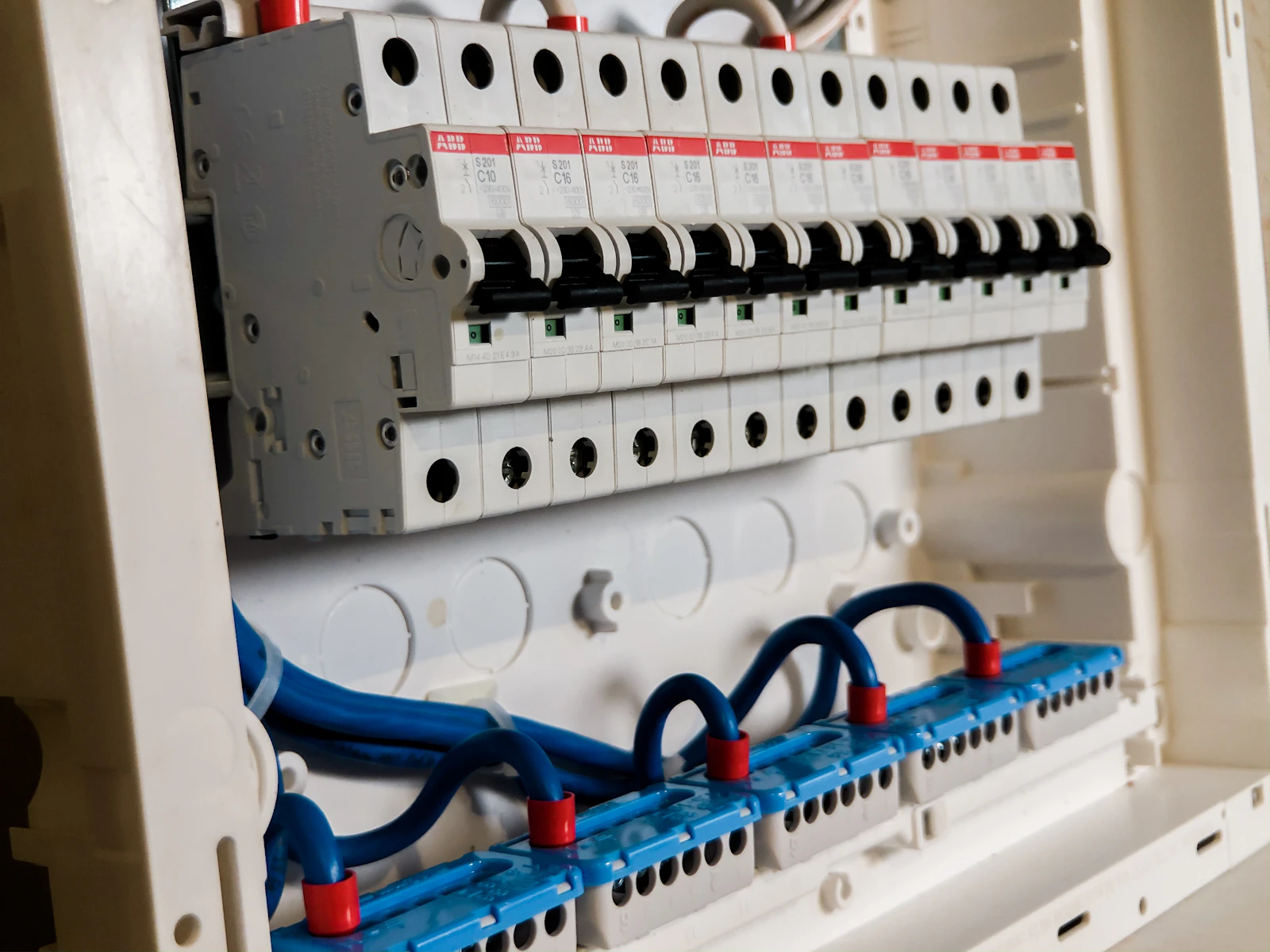
Ceramic fuses, early breakers and safety switches do different jobs. Fuses and ordinary circuit breakers respond to excessive current, while residual current protection responds to leakage. Modern combined protection can address both on individual circuits. Choosing the appropriate devices depends on the installation, including cable condition, rather than simply copying the ratings printed on the old equipment.
Plan the enclosure around the period house
A compact replacement still needs enough room for safe connections and accessible identification. In a house with decorative plaster, a cable path should be assessed before an opening is proposed. Existing routes may be useful, but their presence does not prove the cabling is suitable to keep. Physical access and electrical condition are separate questions.
A board replacement does not itself rewire every room. Where an older section is retained, it must be suitable for the protection and use proposed. Where an appliance addition changes demand, the incoming supply also matters. An owner should understand which parts of the installation are included instead of assuming a new enclosure makes every hidden cable new.
- Check the verandah mounting and cable entry arrangement
- Identify circuits added through separate renovations
- Consider access around original plaster before selecting a route
- Distinguish apartment equipment from shared building services
- Allow readable labels and suitable space around protective devices
How it works
Stress-free from first call
to power on
Skip the endless emails, the quote chasing and the dodgy pricing. Get in touch today, receive a clear fixed price quickly, and a licensed electrician can often be at your place that same week.

Tell us what you need
Call, message or use the online form in two minutes. Say what needs doing, or what's wrong, and we'll reply promptly.
Get your fixed price
After an inspection, you get one clear all-inclusive price before work begins. The quoted figure is what you pay, with no unexpected extras.
Sit back, job done tidy
A licensed A-Grade electrician carries out your job to AS/NZS 3000, tests each circuit and leaves your home tidier than before.
Use appliance plans to define the next stage
Cooking, cooling and lighting changes can each alter what the board must serve. Listing those planned changes makes the scope clearer than requesting the largest enclosure that fits. Spare device positions are useful only when the supply and cables can support the intended circuits. A large board can still be fed by an inadequate or deteriorated connection.
Houses near Holmes Road and Queens Park do not all share the same electrical history. The need for replacement follows the actual fuse arrangement, protection, circuit condition and planned load. In an apartment, the building's access rules remain relevant even where the new board stays within the unit. Both settings benefit from decisions based on the installation rather than its appearance.
What every Moonee Ponds job includes
- A-Grade licensed electrician, fully insured
- A written, fixed price settled before any work begins
- Work completed to AS/NZS 3000
- Certificate of Electrical Safety on completion
- Lifetime workmanship guarantee
Switchboard Upgrades in Moonee Ponds: common questions
Does the timber verandah box have to stay?+
Not necessarily. Its condition and the way it supports and protects the equipment need assessment. A new switchboard may fit a sound existing arrangement, while damage or poor cable entry may require a different approach. The visible box should not be judged separately from the electrical installation.
Will a new board replace the old cable behind the plaster?+
No, not automatically. Replacement of protective equipment and replacement of wiring are different tasks. Existing circuits need to be suitable for continued use; any deteriorated cable should be addressed on its condition rather than assumed to be covered by a board swap.
Can my apartment board be assessed without changing shared services?+
The unit and building supply boundaries need to be established first. Work entirely within the apartment can have a different scope from changes beyond its board. Shared equipment and common property may require building approval, so the arrangement should be confirmed before work is planned.
Is a labelled breaker proof that its circuit is safe?+
No. A label helps identify a circuit but does not establish insulation condition, earthing or capacity. Protective equipment and connected wiring need appropriate checks. An inaccurate label can also hide later additions, which is why identification should reflect the actual installation.